ROOFING WEB DESIGN
Roofing Web Design That Turns Visitors Into Booked Estimates
Roofing web design built around one question: does this site get someone to call? Fast, mobile-first, and built with the trust signals a homeowner needs before handing over a job this size. One tap to call or request a quote, not five.
100+ roofing web design projects managed.
Roofing Web Design Built To Get You More Calls
Managed 100+ ROOFING Web Design Projects.
Your roofing website should do more than look good. It should turn visitors into real enquiries.
We create professional, high-converting roofing websites with relevant services, compelling project galleries, strong calls to action, and easy quote forms that build trust and make it simple for customers to call you.
Key Takeaways
- 94% of a visitor’s first impression of a business comes from website design alone, before they read a single word of copy or check a single review.
- 70% of homeowners say they are more likely to call a business that has a proper website, and 58% check a website to confirm something they already saw on Google or social media.
- Most local home service searches now happen on a phone. A site that loads slowly or hides the phone number loses the call before a homeowner reads a word.
- You do not need a local roofing web design company. Web design is built and delivered remotely almost everywhere now, so the work matters more than the postcode of who did it.
- Accessibility is a legal requirement in most markets, not just a nice extra. Building to the WCAG standard from the start covers it once instead of fixing it later.
- You own the site. Every page, every image, every line of code stays yours if you ever move on.
The Problem: A Generic Website Costs You Jobs You Never Know You Lost
A homeowner with storm damage does not browse casually. They open a few sites on their phone, decide in seconds whether a business looks real and trustworthy, and either tap to call or move to the next name on the list. A slow, dated or generic-looking site loses that decision before the homeowner reads a single word of copy.
This is where a lot of roofing companies quietly lose jobs. Not to a competitor with better work, but to a competitor with a better website standing between the homeowner and the phone call. A roofers web design service exists to close that gap: a site built around speed, clarity and the trust signals a homeowner needs before handing over a job of this size.
How Effective Is A Good Website, Really?
This is worth answering honestly rather than just asserting, since it is the question behind every redesign decision.
A website’s effect on a roofing business is mostly a trust effect, not a magic-traffic effect. Ninety four percent of a visitor’s first impression of a business comes from the design of the site itself, before they have read a word of the copy or checked a single review. That number alone explains why two roofing companies with identical crews, identical pricing, and identical quality of work can get very different call volumes from the same search traffic. The one with the better site simply looks more trustworthy in the first three seconds.
The effect compounds from there. Around seven in ten homeowners say they are more likely to call a business that has a proper website at all, and a majority use a business website to confirm something they already saw elsewhere, a Google review, a Facebook post, a neighbour’s recommendation. A roofing company with no site, or a dated one, fails that check at the exact moment a homeowner was already leaning toward calling. The website is not usually what starts the decision. It is very often what confirms or kills it.
This also explains why a new website rarely, by itself, creates brand-new search rankings for a term you did not already rank for. What it reliably does is convert more of the traffic you already get, from ads, from referrals, from organic search, from someone typing your name into Google after a neighbour mentioned you. For a roofing company, where a single job is worth thousands and a homeowner is actively comparing two or three options, that conversion effect on existing traffic is usually where a redesign pays for itself fastest, well before any new ranking shows up.
What is included in our roofing web design?
Every build covers six parts, whether you found us searching for roofing website design or roofing web design or just comparing options online.
Custom, Mobile-First Design
Built around how homeowners actually browse: on a phone, in a hurry, often stressed about active damage. Tap-to-call buttons, a clear quote form, and a layout that works without pinching and zooming, not a desktop design squeezed down to fit a smaller screen as an afterthought.
Conversion-Focused Layout
A homepage exists to move a visitor toward one action: calling or requesting a quote. Every page gets one clear next step instead of five competing links, since a page trying to do everything usually gets nobody to do anything.
Speed and Technical Performance
A slow site loses homeowners before they see the offer, and it holds back everything else you invest in later, since a slow foundation drags down PPC landing pages and SEO rankings alike. We build for real load-time targets on a phone connection, not just a passing grade on a single test.
Trust Signals and Project Galleries
Licence and insurance information, real reviews, and a before-and-after gallery placed where a homeowner actually looks, not buried three clicks deep. Before-and-after photos are consistently the strongest trust-builder in this industry, and a site needs to make them easy to find. Where it fits, we also build in material and shingle information directly on the site, so a homeowner comparing styles and colours never has to leave for a manufacturer’s page and risk getting shown a competitor instead.
SEO Foundation and Technical Setup
Clean structure, schema markup, and a site built so search engines and AI tools alike can read what your business does and where you work. A beautiful site that search engines cannot parse properly is still an invisible site.
Call Tracking and Form Routing
Every call and form from the site gets tracked back to the page and channel that produced it, and every form lands somewhere a person actually sees it, with an automatic text reply so the homeowner knows you got it. A site that generates leads nobody answers is not much better than no site at all.
Built To Meet Accessibility Law, Not Just Look Good
Website accessibility is not just good practice. In most markets it is a legal requirement that applies to private businesses, not only government sites, and roofing companies have received real demand letters over sites that are hard to use for visitors with disabilities.
The rules vary from place to place, but they nearly all point toward the same technical standard: the Web Content Accessibility Guidelines (WCAG). Building to that standard from the start covers the legal requirement in one pass instead of needing separate fixes later.
In practice, this means things like readable colour contrast, text that works with a screen reader, forms that can be completed without a mouse, and video captions where relevant. None of this makes a site look worse. Done well, it usually makes a site clearer and easier to use for every visitor, not just the ones the law protects.
Common Mistakes That Waste A Website Budget
A handful of repeatable mistakes account for most roofing websites that look fine but never produce calls.
Using a Generic Template With The Logo Swapped In
Homeowners see a lot of contractor sites, and a template that looks like every other one does nothing to set your business apart. Design built around your actual services and service area performs noticeably better than a reskinned template.
Skipping Mobile Testing
A site that looks fine on a desktop monitor can be hard to use on a phone: slow buttons, text too small to read, a form that will not load. Since most local home service searches happen on a phone, this single gap can undercut everything else on the site.
Burying The Phone Number And Quote Form
If a homeowner has to scroll or click more than once to find a way to contact you, some of them simply leave instead. The call to action should be visible without any searching.
Letting The Blog Or Gallery Go Stale
A site with a blog last updated two years ago, or a project gallery with no recent work in it, raises the same question a dormant social media page does: is this business still operating? A site needs a visible sign of recent, real activity, not just a polished launch day.
No Plan For After Launch
A site that never gets updated slowly falls behind on speed, security and search rankings. Launch is the start of the site’s life, not the end of the project.
Treating The Website As Separate From Everything Else
A site built without thinking about where PPC traffic lands, what SEO needs structurally, or how social content links back rarely supports those channels well, even if it looks fine on its own.
Letting The Agency Keep The Keys
Some web design companies for roofing build on their own platform and take the site down when you cancel. Then you start from zero. Always confirm you own the domain, the hosting account and the site files before any build starts.
What A Roofing Website Actually Needs?
A generic small business template misses the features that matter most for this industry.
Storm Damage Galleries
A dedicated place to show real storm and insurance work, since this is often the highest-value, most time-sensitive lead type a roofing company gets.
Service and Area Pages
A distinct page for each service and each area served, not one page trying to cover everything. This also happens to be the foundation SEO work builds on top of, so a site built without this structure makes every future SEO effort work harder than it needs to.
Quote Request Forms That Ask The Right Questions
A short form that captures service type, rough timeline, and photos when relevant, so a call starts already qualified instead of starting from zero.
Financing Information
Many homeowners weigh a new roof against a monthly payment, not a lump sum. Where you offer financing, a clear, honest page about it can be the difference between a homeowner calling now or putting the decision off for months.
Click-To-Call Tracking
Every call from the site should be traceable back to the page and channel that produced it, the same tracking discipline that matters for PPC and social ads.
Reviews Pulled In Live
A review block that pulls your latest Google reviews onto the site automatically, so the proof stays fresh without anyone having to update it by hand.
How We Scope And Build Your Website?
What a roofing company web design project needs varies more by what is actually included than by who builds it. A single-crew roofer with three services and one area needs a very different build from a multi-crew company with commercial work, financing, and a dozen area pages.
During the free website review we look at your current site on a phone, your top local competitors’ sites, and what you actually want more of: storm work, re-roofs, commercial, repairs. From that we tell you plainly what the build needs to include, how long it will take, and what we would fix first if a full rebuild is not needed yet. You see the scope before you commit to anything.
When you compare quotes, watch for two warning signs. A price with no breakdown of what it covers (design, pages, content, SEO foundation, tracking) usually means the number was picked to sound competitive rather than to reflect real work. And a quote with no plan for after launch means you will be back looking for another agency within a year or two.
Ongoing maintenance and hosting are handled separately from the build, and they are not optional in practice. A site that never gets updated slowly becomes a liability rather than an asset.
The Build Process
Review (Week 1)
We audit your current site, your competitors, and your goals, then agree on the scope.
Structure And Content (Weeks 1 to 2)
Page map, service and area pages planned, content drafted from your real jobs and photos.
Design And Build (Weeks 2 to 4)
Mobile-first design, built for speed, with tracking and forms wired in.
Test And Launch (week 4)
Tested on real phones and slow connections, accessibility checked, then live.
After Launch
Speed, security and content updates on a set schedule, so the site keeps working.
Most standard builds go live within a few weeks of content and photos being ready. The biggest delay is almost always waiting on photos, not the build itself.
Do You Need A Local Roofing Web Design Company?
Not really, and this is worth saying plainly rather than dodging. Unlike an actual roofing crew, web design work is built and delivered remotely almost everywhere now. Searching for web design for roofing companies near you is a completely reasonable instinct, but proximity rarely affects the quality of the work, since the entire process happens through calls, shared documents and a live site you can review from anywhere.
What actually matters is whether the company understands roofing: storm-driven demand, insurance claims, service-area structure. Not whether their office sits in your town. The best roofing web designs come from real roofing-specific experience, not from the company physically closest to you.
How this fits with SEO and other marketing?
A website is not a standalone asset. It is the foundation everything else in a marketing plan stands on.
PPC and Facebook ad campaigns send paid traffic to landing pages that live on this site, so a slow or unclear site quietly wastes every dollar spent getting someone there. SEO work depends on the same technical foundation this build creates: the page structure, the schema, the service and area pages. Social media content links back to this site too, and a page that looks abandoned or dated undercuts the trust that content is trying to build in the first place.
Building the website first, or fixing it early, makes every other channel perform better instead of fighting an outdated foundation. A roofing company that redesigns the site after already investing in PPC or SEO often sees performance jump on campaigns that were already running, simply because the page those visitors land on finally matches the quality of the traffic being sent to it.
Built For How Roofers Actually Get Hired
A website works the same everywhere technically, but a few real differences shape how one gets built for each market. The words homeowners use for the job, the roof types in the photos, the licence and insurance details a homeowner expects to see, the currency and the phone format, and even what “storm season” means all change from market to market.
A site built for one market and copied into another usually reads slightly wrong to the people it needs to convince, even when the underlying design is solid. We build each site around the market it is actually serving, using the words and proof that homeowners there expect.
Frequently Asked Questions
How much does roofing web design cost?
It depends on what the build needs to include: how many services and areas you cover, whether you need financing pages, galleries or CRM integration, and whether your current site can be fixed or needs a full rebuild. We scope every build after a free review of your current site and your competitors, and you see exactly what is included before you commit. Be cautious of any quote that does not break down what it covers.
How long does it take to build a roofing website?
Most standard builds go live within a few weeks once content and photos are ready. Custom builds with more complex features take longer. The biggest delay is usually waiting on content and photos, not the build itself.
Do I need a local roofing web design company?
Not really. Web design is delivered remotely almost everywhere now, through calls and shared reviews rather than in-person meetings. What matters more than location is whether the company has real roofing-specific experience.
Is my current website actually costing me leads?
If it loads slowly on a phone, buries the phone number, or looks the same as it did five years ago, likely yes. A quick way to check: open it on your own phone with a slow connection and see how long it takes before you could tap to call.
What makes a roofing website different from a generic small business site?
Storm damage galleries, service and area pages built for local search, quote forms that capture the right details, live reviews, and financing information. A generic template built for any small business rarely includes any of these.
Is website accessibility actually required by law?
In most markets, yes, and the rules apply to private businesses, not only government sites. Nearly all of them point to the same WCAG technical standard, so we build every site to that standard from the start rather than fixing it after a complaint.
How many pages does a roofing website actually need?
It depends on the goal. A simple, informational site can work with around five pages: home, services, gallery, about, and contact. A site built to actually rank and generate leads usually needs more, service pages, area pages, a blog, and a reviews page, often fifteen to thirty pages or more as the business grows.
Does a new website help with SEO and Google rankings?
Yes, though mostly as a foundation rather than an instant result. A site with clean structure, proper schema, and dedicated service and area pages gives SEO work an actual foundation to build on, instead of fighting an outdated structure the whole time. On its own, a redesign rarely creates rankings for terms you did not already rank for.
What should I look for in the best roofing web design company?
Real examples of roofing websites they have built, not just any small business site. Ask how they handle mobile speed, accessibility and SEO foundation, and ask what happens after launch. A company with no maintenance plan is setting you up for an outdated site within a year or two.
Can my website work with my other marketing, like SEO or Facebook ads?
Yes, and it should. Paid traffic and organic traffic both land on this site, so a weak site quietly undercuts every other channel you invest in. A site built with that in mind, with proper tracking, clean landing pages and fast load times, makes every other marketing dollar work harder.
Will I own my website?
Yes. The domain, the hosting account, the files and the content are all in your name from day one. If you ever stop working with us, the site stays live and stays yours. Some agencies build on a locked platform and take the site down when you leave. We do not.


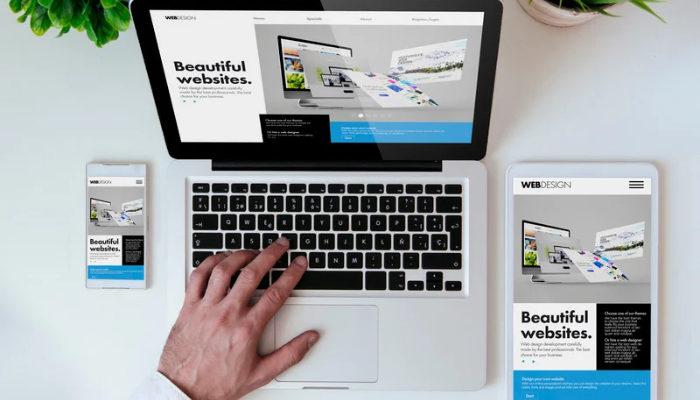
What you get with every website build?
• A custom, mobile-first design built around your services and service area
• Conversion-focused layout with clear calls to action on every page
• Speed and technical performance built in from the start, not patched on later
• Accessibility built to the WCAG standard
• SEO foundation, including schema markup and a proper page structure
• Call tracking and form routing with automatic lead reply
• Ongoing maintenance and hosting support after launch
• Full ownership of the domain, hosting, files and content
Start with a website that actually works for you!
Website design for roofing contractors does not need to take months or cost more than the job it is meant to help you book.
If your current site is costing you calls you never even knew you lost, this is where to start.